
The Hidden Art and Science Behind Welding and Fabrication
- cort johnson
- Oct 26, 2025
- 1 min read


Welding and fabrication have been shaping human progress for over two millennia, long before electricity and gas torches existed. What began with blacksmiths in the Bronze Age has grown into a precise, technology-driven field that supports nearly every major industry—from automotive engineering to shipbuilding, construction, and renewable energy. Welding isn’t limited to Earth alone; NASA has conducted metal-joining experiments in space to understand how structures can be built beyond gravity’s pull. If the Eiffel Tower were constructed today, its millions of rivets would likely be replaced with high-strength welds, making it faster to assemble and more durable. Techniques like MIG, TIG, and Arc welding have modernized how metal is shaped, yet they still preserve the ancient principle of uniting strength through heat and craftsmanship.
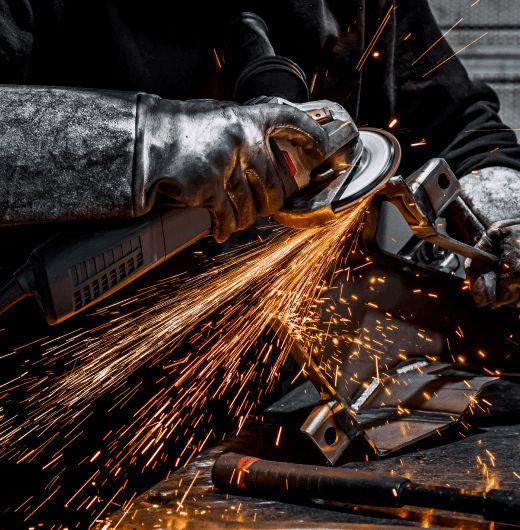
Beyond the fire and sparks, welding represents an art form that blends precision with creativity. Some of the most advanced forms, like friction stir and ultrasonic welding, don’t even require flames—using motion or sound waves instead to achieve clean, permanent bonds. These innovations show how the trade continues to evolve into a blend of science, design, and problem-solving. Every project, whether a steel frame or a decorative gate, tells a story of patience, accuracy, and pride in workmanship. Welding is more than joining metal; it’s the act of shaping ideas into lasting structures that stand as quiet symbols of skill and human ingenuity.


Comments